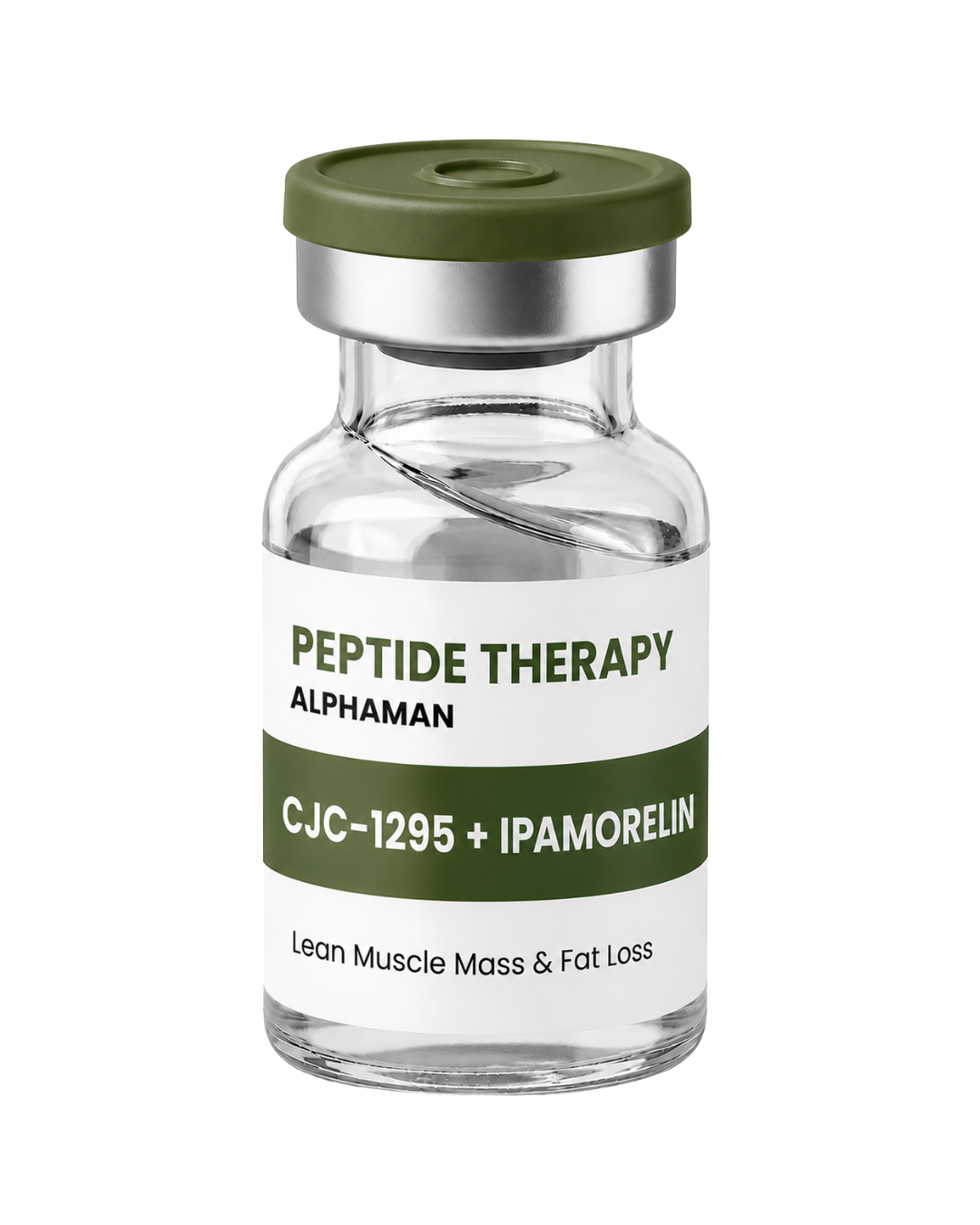
If you’re looking for the best peptide for muscle building, CJC-1295 + Ipamorelin is one of the most commonly prescribed options for supporting lean muscle growth and recovery under medical supervision. MK-677 is a popular oral alternative, while BPC-157 and TB-4 are better suited for recovery than muscle growth. The right therapy depends on your health, goals, and physician evaluation.
Key Takeaways
- CJC-1295 + Ipamorelin is often the preferred choice for overall muscle growth and recovery.
- MK-677 is a popular oral option that may support growth hormone and IGF-1 levels.
- BPC-157 and TB-4 are primarily used to support recovery from injuries.
- Peptides work best when combined with resistance training, adequate protein, and quality sleep.
- Human research continues to evolve, and treatment should always be supervised by a qualified healthcare provider.
What Are Muscle-Building Peptides?
Muscle-building peptides are compounds that may support the body’s natural processes involved in muscle growth, recovery, and tissue repair. Rather than acting like anabolic steroids, many peptides work by influencing growth hormone or other signaling pathways involved in recovery and body composition.
While some patients notice improvements in recovery and training consistency, peptides are not a substitute for exercise, proper nutrition, or adequate sleep. Results vary, and they should only be used under medical supervision.
How Peptides Work for Muscle Growth
Peptides help muscle growth in a few key ways:
- Increase Growth Hormone (GH) & IGF-1
GH stimulates muscle cell repair and growth.
IGF-1 supports hypertrophy and faster recovery. - Reduce Stress Hormones
Peptides can blunt cortisol, which slows down gains if left unchecked. - Aid Fat Loss
Peptides like AOD-9604 help burn fat, making lean muscle more visible. - Fight Inflammation & Improve Recovery
BPC-157 and TB-4 support healing, joint health, and workout recovery. - Improve Sleep & Recovery Cycles
Some peptides boost deep sleep, when most muscle repair happens.
See If You’re a Candidate for Peptide Therapy
Current Evidence at a Glance
Evidence quality: Moderate
Research suggests that certain peptide therapies may support growth hormone release, recovery, and lean body composition. However, long-term human studies remain limited for many peptides, and most evidence supports using them alongside structured exercise, proper nutrition, and physician supervision rather than as standalone treatments.
Best Peptides for Muscle Building 2026
| Peptide | Best For | Administration |
|---|---|---|
| CJC-1295 + Ipamorelin ⭐⭐⭐⭐⭐ | Lean muscle growth, recovery, body recomposition | Injection |
| MK-677 (Ibutamoren) ⭐⭐⭐⭐☆ | Oral growth hormone support and bulking | Oral |
| IGF-1 LR3 ⭐⭐⭐⭐☆ | Muscle hypertrophy | Injection |
| BPC-157 ⭐⭐⭐☆☆ | Injury recovery | Injection |
| TB-4 (Thymosin Beta-4) ⭐⭐⭐☆☆ | Muscle and tissue regeneration | Injection |
| AOD-9604 ⭐⭐⭐☆☆ | Fat loss and lean muscle preservation | Injection |
CJC-1295 + Ipamorelin (Best Overall)
For many patients, this combination is one of the most commonly prescribed therapies for supporting natural growth hormone release. When combined with strength training and good nutrition, it may help improve recovery, support lean muscle growth, and promote healthier body composition.
Best for
- Lean muscle growth
- Recovery
- Strength training
- Overall performance
See before and after results here.
MK-677 (Best Oral Option)
MK-677 is an oral growth hormone secretagogue rather than a peptide, but it’s often discussed alongside peptide therapy. It may increase growth hormone and IGF-1 levels without injections and can also increase appetite, making it attractive during bulking phases.
Best for
- Oral therapy
- Bulking
- Growth hormone support
IGF-1 LR3
IGF-1 LR3 has been studied for muscle repair and hypertrophy. Because of its potency, it’s generally reserved for carefully selected patients under physician supervision.
Best for
- Muscle hypertrophy
- Recovery from intense training
BPC-157
BPC-157 is better known for supporting tendon, ligament, and soft tissue recovery than directly increasing muscle mass. For athletes recovering from injuries, it may help support a return to consistent training.
Best for
- Injury recovery
- Tendon and ligament support
TB-4 (Thymosin Beta-4)
TB-4 may support muscle regeneration and soft tissue healing. It’s often paired with BPC-157 in physician-supervised recovery protocols.
Best for
- Muscle regeneration
- Recovery support
AOD-9604
AOD-9604 was originally developed to support fat metabolism. While it doesn’t directly build muscle, it may help preserve lean muscle during fat loss and support body recomposition.
Best for
- Fat loss
- Lean muscle preservation
Which Muscle Building Peptide Is Right for You?
There isn’t one peptide that’s best for everyone. Your goals matter.
| Goal | Recommended Option |
|---|---|
| Overall muscle growth | CJC-1295 + Ipamorelin |
| Oral alternative | MK-677 |
| Muscle hypertrophy | IGF-1 LR3 |
| Injury recovery | BPC-157 + TB-4 |
| Body recomposition | AOD-9604 |
Factors That Affect Results
Even the best peptide won’t produce meaningful results without healthy habits.
Results are influenced by:
- Progressive resistance training
- Adequate protein intake
- Sleep quality
- Hormone balance
- Overall health
- Consistency with treatment and follow-up care
How to Maximize Results with Peptides
- Train consistently – peptides amplify results, but only if paired with resistance training.
- Eat for growth – protein + complex carbs + healthy fats.
- Sleep 7–9 hours – many peptides improve deep sleep, where GH release peaks.
- Work with a professional – avoid self-dosing or unregulated peptides.
Are Muscle-Building Peptides Safe?
When prescribed and monitored by a qualified healthcare provider, peptide therapy may be appropriate for certain patients. Like any medical treatment, however, peptides can cause side effects and aren’t suitable for everyone.
Potential risks vary depending on the peptide but may include injection-site irritation, water retention, increased appetite (with MK-677), or changes in blood sugar. Patients should always discuss their medical history, medications, and treatment goals with their healthcare provider before starting therapy.
Are Muscle-Building Peptides FDA Approved?
Some peptide-based medications have received FDA approval to treat certain medical conditions. However, many peptides promoted for muscle building, athletic performance, or anti-aging have not been approved by the FDA for those uses. Even when a peptide medication is FDA approved, using it for muscle growth may be considered off-label, meaning it is prescribed for a purpose other than its approved indication.
FDA Approval Status of Common Muscle-Building Peptides
| Peptide | FDA Approved? | Current Status / Approved Use |
|---|---|---|
| Tesamorelin | ✅ Yes | Approved for HIV-associated lipodystrophy, not for muscle building. |
| Semaglutide | ✅ Yes | Approved for type 2 diabetes and chronic weight management. |
| Tirzepatide | ✅ Yes | Approved for type 2 diabetes and chronic weight management. |
| CJC-1295 | ❌ No | Not FDA approved; investigational for muscle-building purposes. |
| Ipamorelin | ❌ No | Not FDA approved; investigational. |
| MK-677 (Ibutamoren) | ❌ No | Investigational compound; not FDA approved. |
| IGF-1 LR3 | ❌ No | Research compound; not FDA approved for muscle building. |
| BPC-157 | ❌ No | Investigational peptide; not FDA approved. Regulatory discussions regarding compounding do not mean FDA approval. |
| TB-4 (Thymosin Beta-4/TB-500) | ❌ No | Investigational peptide; not FDA approved for muscle-building or recovery indications. |
| AOD-9604 | ❌ No | Investigational peptide; not FDA approved. |
Official FDA information: https://www.fda.gov/drugs
Book your consult now — start seeing results in weeks
Here at AlphaMan Men’s Clinic, We offer clinician-supervised evaluation for peptide therapy options like muscle-building peptides CJC-1295 + Ipamorelin, BPC-157 & TB-500. Certain peptides are not FDA-approved; any prescription is individualized based on your exam and goals.
Book your free online consultation with AlphaMan Clinic. Call (818) 650-8049 or visit us to get a personalized peptide therapy plan.
Conclusion
The best peptide for muscle building depends on your individual goals, health history, and training program. For many patients, CJC-1295 + Ipamorelin remains one of the most commonly prescribed options for supporting lean muscle growth and recovery, while MK-677 offers a popular oral alternative. Recovery-focused therapies such as BPC-157 and TB-4 may also play a role for active individuals returning from injury.
Peptide therapy is most effective when combined with structured resistance training, balanced nutrition, adequate sleep, and ongoing medical supervision. A comprehensive evaluation with a qualified healthcare provider is the best way to determine which treatment, if any, is appropriate for your needs.
Frequently Asked Questions
Are oral peptides as effective as injections?
Some oral peptides like MK-677 work well, but others are more effective by injection. A provider can guide you on the best option.
How fast do peptides work?
Most users notice recovery improvements in weeks. Visible muscle changes may take 2–3 months.
Are peptides safe for long-term use?
When prescribed and monitored, many peptides can be used safely. Regular labs are essential.
What are the side effects of peptides?
Mild side effects may include water retention, increased appetite, or joint aches. Most are manageable under medical supervision, but ongoing monitoring is important.
Can peptides replace testosterone therapy (TRT)?
Not exactly. Peptides stimulate GH/IGF-1, while TRT restores testosterone. Some men use both under medical supervision.
What’s the best peptide stack for muscle growth?
CJC-1295 + Ipamorelin for overall GH release, MK-677 for convenience, and BPC-157 for recovery support.
References
- Teichman, S. L., et al. (2006). Prolonged stimulation of growth hormone (GH) and insulin-like growth factor I secretion by CJC-1295, a long-acting analog of GH-releasing hormone, in healthy adults. Journal of Clinical Endocrinology & Metabolism, 91(3), 799–805.
- Gobburu, J. V. S., et al. (1999). Pharmacokinetic-pharmacodynamic modeling of ipamorelin, a growth hormone releasing peptide, in human volunteers. Journal of Pharmacokinetics and Biopharmaceutics, 27(5), 521–537.
- Nass, R., et al. (2008). Effects of an oral ghrelin mimetic on body composition and clinical outcomes in healthy older adults: A randomized trial. Annals of Internal Medicine, 149(9), 601–611.
- U.S. Food and Drug Administration (FDA). Certain Bulk Drug Substances for Use in Compounding That May Present Significant Safety Risks.
- U.S. Food and Drug Administration (FDA). Compounding and the FDA: Questions and Answers.
- Jäger, R., et al. (2017). International Society of Sports Nutrition Position Stand: Protein and Exercise. Journal of the International Society of Sports Nutrition, 14, 20.
Medical Disclaimer: This content is provided for informational purposes only and does not constitute medical advice, diagnosis, or treatment. It is not a substitute for professional medical evaluation or care. Always consult a licensed healthcare provider before starting, stopping, or changing any medication or treatment. Reliance on this information is at your own risk. No guarantees are made regarding outcomes, and individual results may vary. The authors and publishers disclaim any liability for decisions made based on this content.